Call today for a free quote
07775 837892
Call today for a free quote
07775 837892
A mature silver birch can be a beautiful feature of a garden or rural property, with its distinctive pale bark, delicate foliage and graceful canopy.
However, even a tree that appears healthy above ground can be suffering from serious decay below the surface.
ArborLife Tree Surgeons were called to Shere, Surrey, to remove a large silver birch affected by root decay associated with Ganoderma fungus.
The deterioration of the root system had raised concerns about the tree's stability, particularly during periods of high wind.
With the potential consequences of tree failure in mind, the decision was made to remove the tree using professional sectional dismantling techniques.
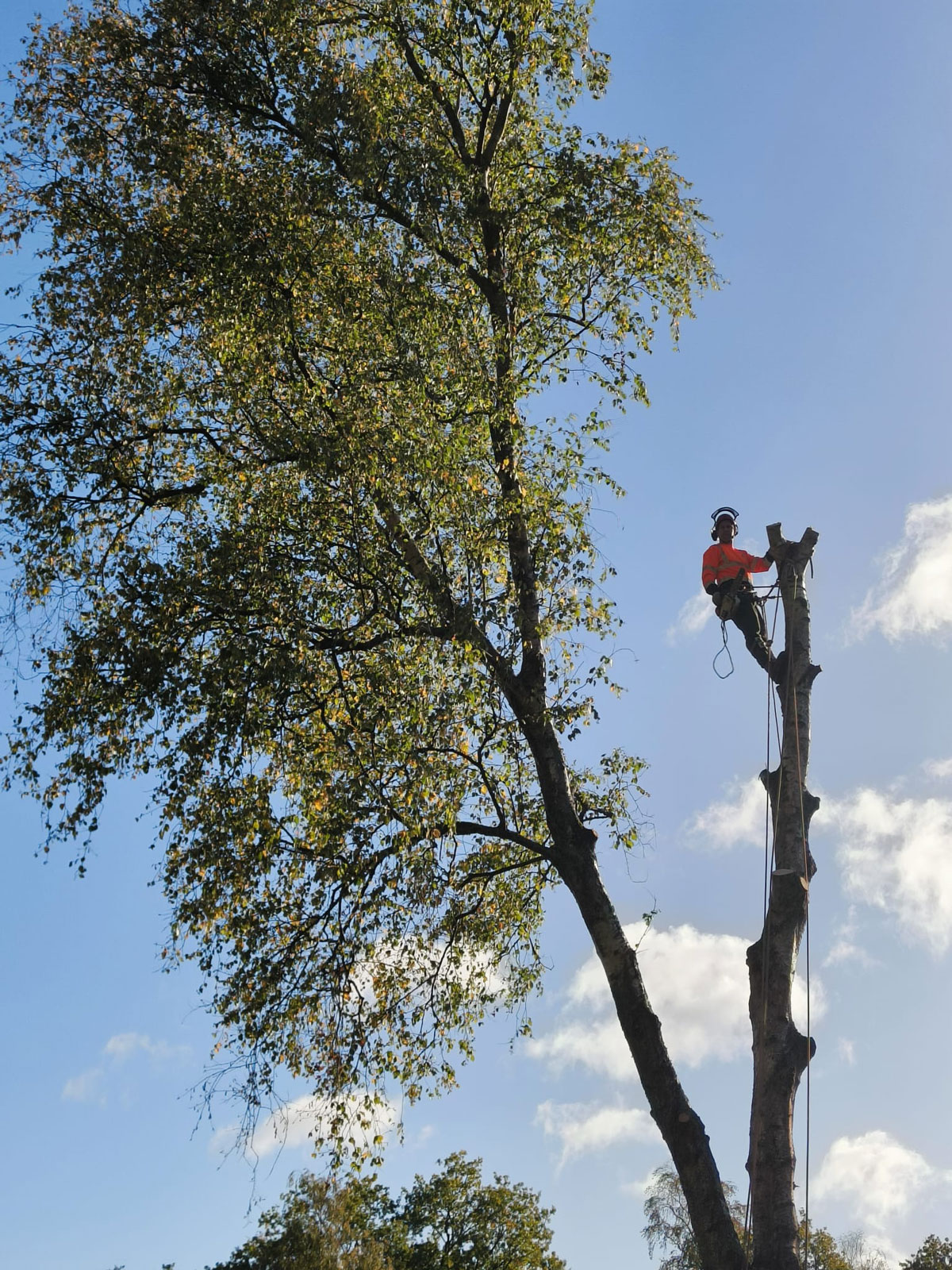
The photographs show ArborLife's tree surgeon working at height as the silver birch was carefully dismantled, section by section.
Ganoderma is a genus of wood-decaying fungi that can affect a range of broadleaved trees, including birch.
Certain Ganoderma species cause decay in the lower trunk, root flare or major structural roots.
This is particularly concerning because a tree relies on its root system not only for water and nutrients but also for anchorage.
When decay affects the structural roots, the tree's ability to resist strong winds may be reduced.
One of the challenges with fungal decay is that significant deterioration can develop internally or below ground before obvious changes appear in the canopy.
A tree may still produce leaves and appear relatively vigorous while its structural condition is becoming compromised.
Ganoderma fungi break down components of wood, progressively reducing its strength.
Depending on the fungal species and the parts of the tree affected, decay may weaken the lower stem or root system.
Potential warning signs include:
Fungal brackets or fruiting bodies around the trunk base
Decay or cavities in the lower stem
Changes in the condition of the root flare
Unusual movement of the root plate
Progressive crown decline or dieback
Cracking or other signs of structural weakness
Not every tree displaying these symptoms will need to be felled, and the presence of a fungal bracket does not automatically mean that failure is imminent.
The extent and location of decay, the tree's structure and the surrounding environment all need to be considered.
In this Shere project, the root decay was sufficiently concerning that removal was required to address the risk of the tree falling.
Trees are naturally adapted to withstand movement in the wind.
Their trunks, branches and root systems work together to distribute the forces acting on the tree.
However, when major structural roots have been weakened by decay, the tree may have a reduced capacity to resist wind loading.
Strong gusts can place considerable force on a large canopy, particularly where the tree is tall or exposed.
If the root system can no longer provide adequate anchorage, there is a risk of the tree uprooting or failing.
This is why professional assessment is important when fungal decay is suspected around the base of a mature tree.
Removing a large tree affected by structural decay requires careful planning.
For this project, ArborLife undertook sectional dismantling, progressively removing the branches and upper sections of the silver birch rather than felling the entire tree in one operation.
The photographs show the tree surgeon working high in the canopy, using professional climbing and rope equipment.
As the dismantling progressed, the tree's branches were removed and the remaining sections of the trunk were reduced.
Sectional dismantling is often used where a tree cannot safely be felled in one piece because of its size, location or surrounding obstacles.
However, where significant decay affects the tree's structure, the suitability of climbing and the choice of dismantling method must be assessed carefully.
The aim is to control the removal process while managing the risks to the tree surgery team and surrounding property.
At ArborLife, we aim to retain mature trees wherever it is reasonably practical and safe to do so.
Trees provide valuable wildlife habitats, absorb carbon and contribute to the appearance of the landscape.
However, when serious decay affects a tree's structural integrity, removal may be the most appropriate option.
The decision should be based on the condition of the individual tree, the likelihood of failure and what could be affected if failure occurred.
In some situations, crown reduction, monitoring or retaining a reduced standing stem may be possible.
Where the risk cannot be managed adequately through these alternatives, complete removal may be recommended.
ArborLife Tree Surgeons provides professional tree felling, sectional dismantling and tree maintenance throughout Surrey.
Our team works in Shere, Guildford, Gomshall, Peaslake, Dorking, Leatherhead, Cobham, Epsom and surrounding areas.
Whether you have a silver birch showing signs of fungal decay, a mature tree with a weakened trunk or a tree that has become unstable following severe weather, we can assess the situation and recommend appropriate work.
Yes. Certain Ganoderma species cause decay in structural roots or the lower trunk, potentially reducing a tree's stability. The risk depends on the extent and location of decay, the tree's condition and its exposure to wind.
Signs may include fungal fruiting bodies around the base, visible decay, changes in the root flare, crown decline or unusual movement. However, root decay is not always obvious, and professional assessment may be needed.
No. Some affected trees can remain standing for many years. The appropriate management depends on the extent of decay, structural condition, location and consequences of potential failure.
Yes. A tree may continue to produce leaves even when decay is affecting parts of its structural root system. Canopy appearance alone is not a reliable indication of root stability.
Not necessarily. Significant decay can compromise the strength of the trunk or roots. A tree surgeon must assess whether climbing is appropriate or whether an alternative access or removal method is required.
The cost depends on the tree's height, diameter, condition, access and proximity to buildings or other obstacles. Additional equipment or specialist techniques may be required where decay has compromised the structure.
Not automatically. Fungal brackets can indicate internal decay, but the level of risk varies considerably. Arrange a professional inspection before deciding whether the tree needs removal or can be safely retained.
If you've noticed fungal brackets, root decay, unusual movement or signs of deterioration in a tree on your property, professional advice can help you understand the risks.
Contact ArborLife Tree Surgeons for an assessment and quotation for dangerous tree removal, sectional dismantling or tree maintenance in Shere and across Surrey.
Early assessment can help identify potential problems and establish the most appropriate course of action.

ArborLife dismantling a mature silver birch affected by Ganoderma-associated root decay.
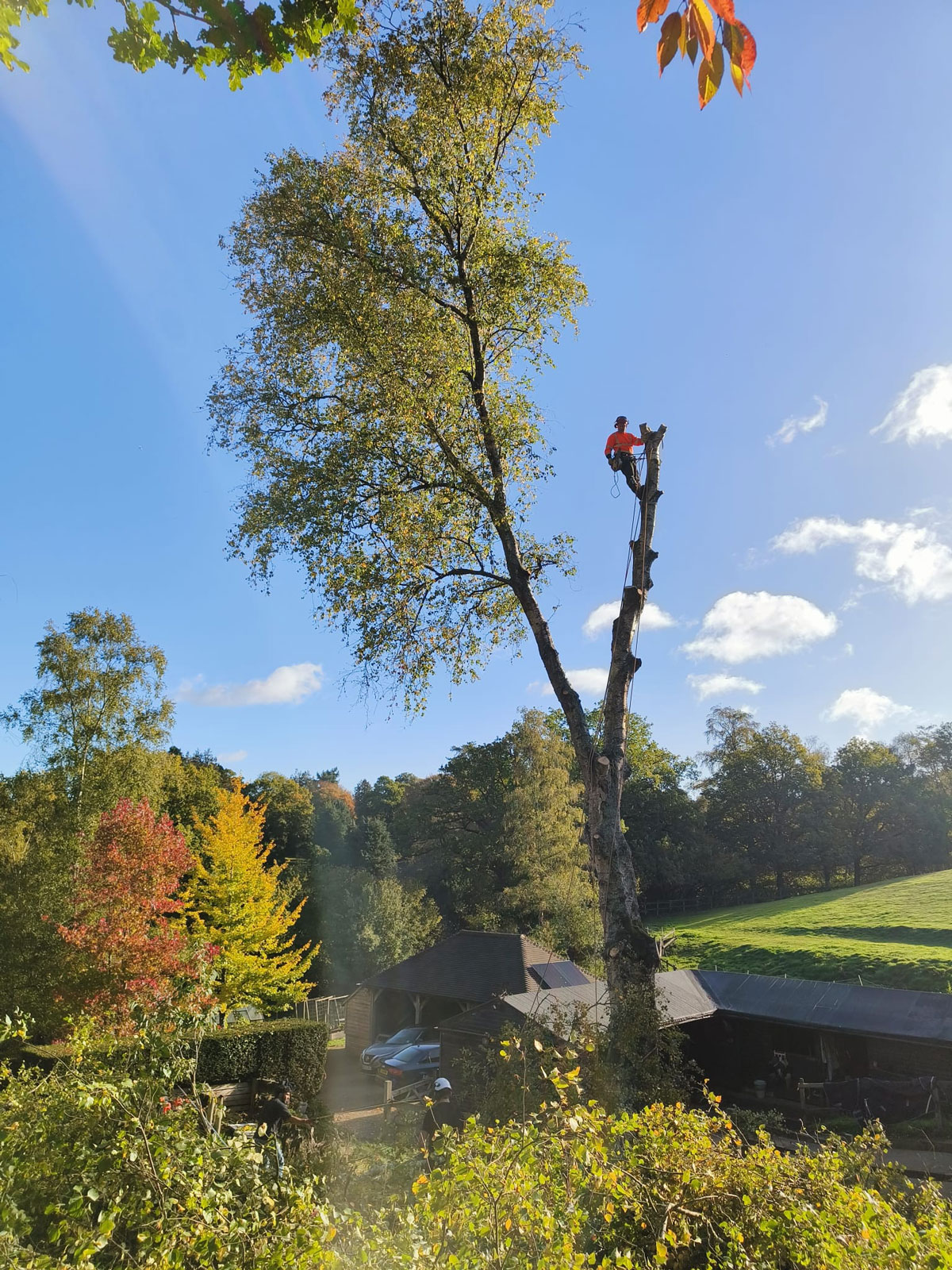
The silver birch being progressively dismantled to manage the risks associated with its deteriorating root system.
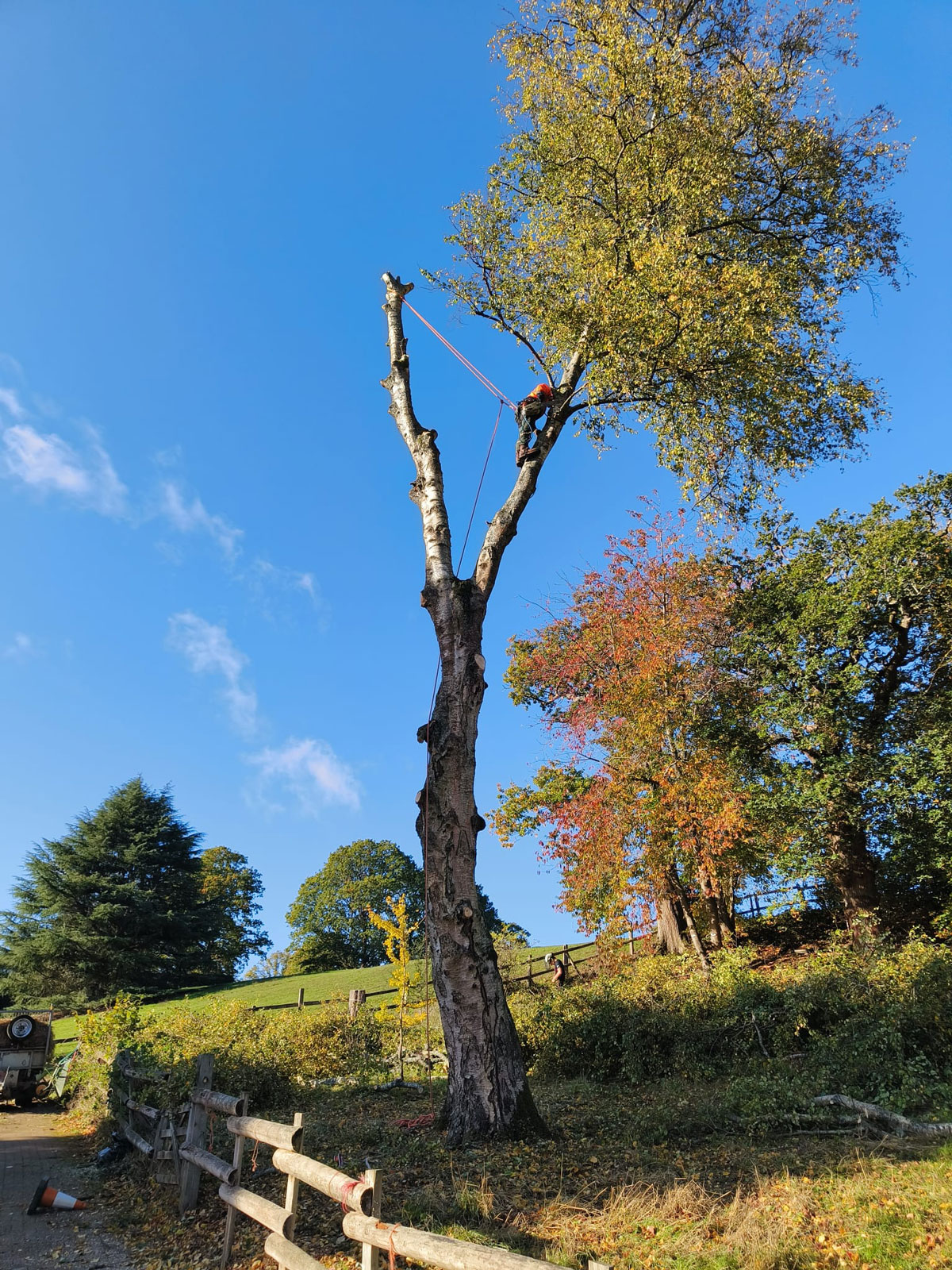
Professional rope-access tree surgery during the removal of a silver birch with Ganoderma-related root decay.

© 2026 Arborlife