Call today for a free quote
07775 837892
Call today for a free quote
07775 837892
Not all tree surgery is about removing dangerous trees or cutting back branches that have grown too close to buildings. Sometimes, the challenge is correcting previous pruning work that has left a tree with an unbalanced or poorly managed crown.
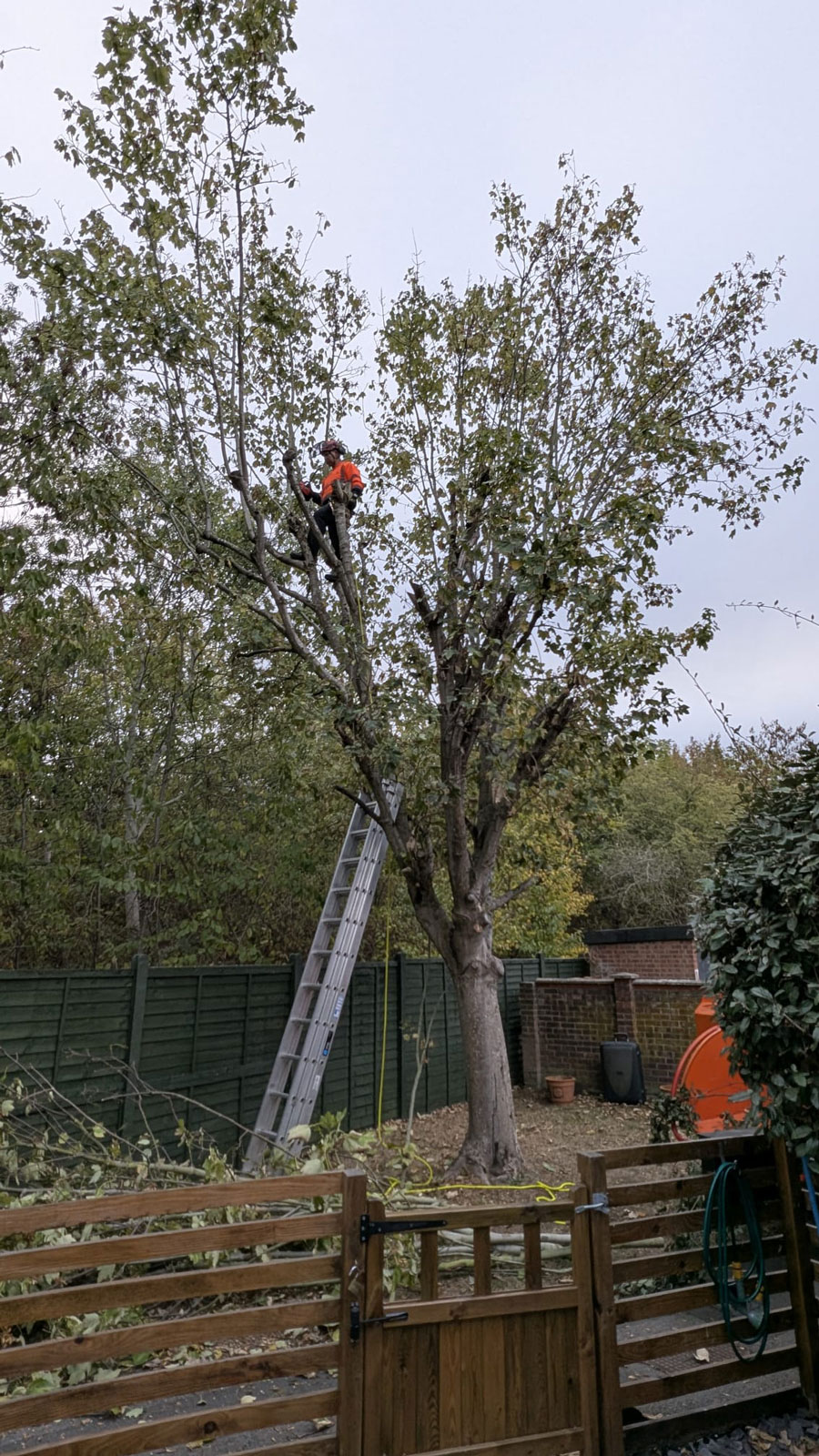
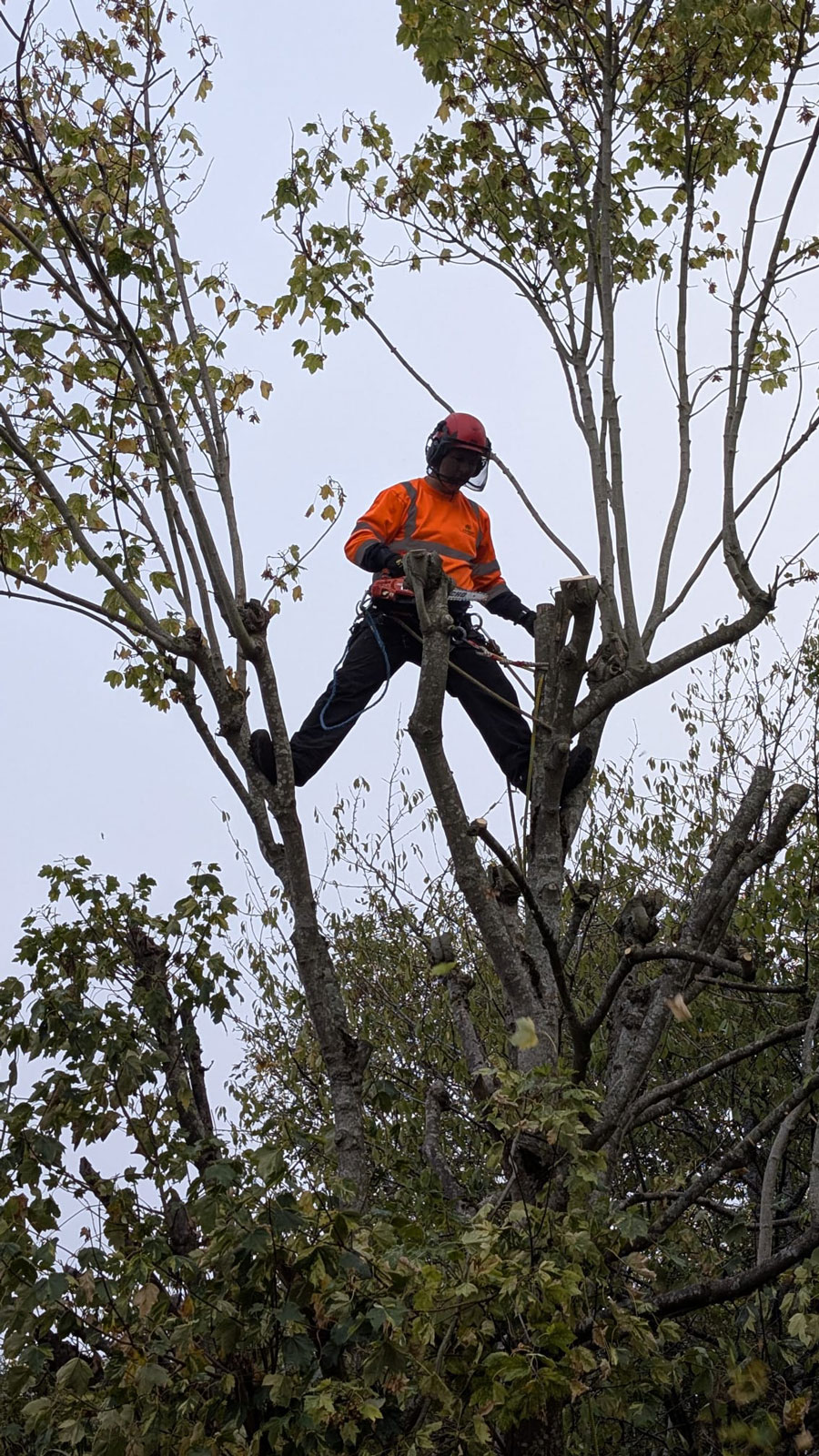
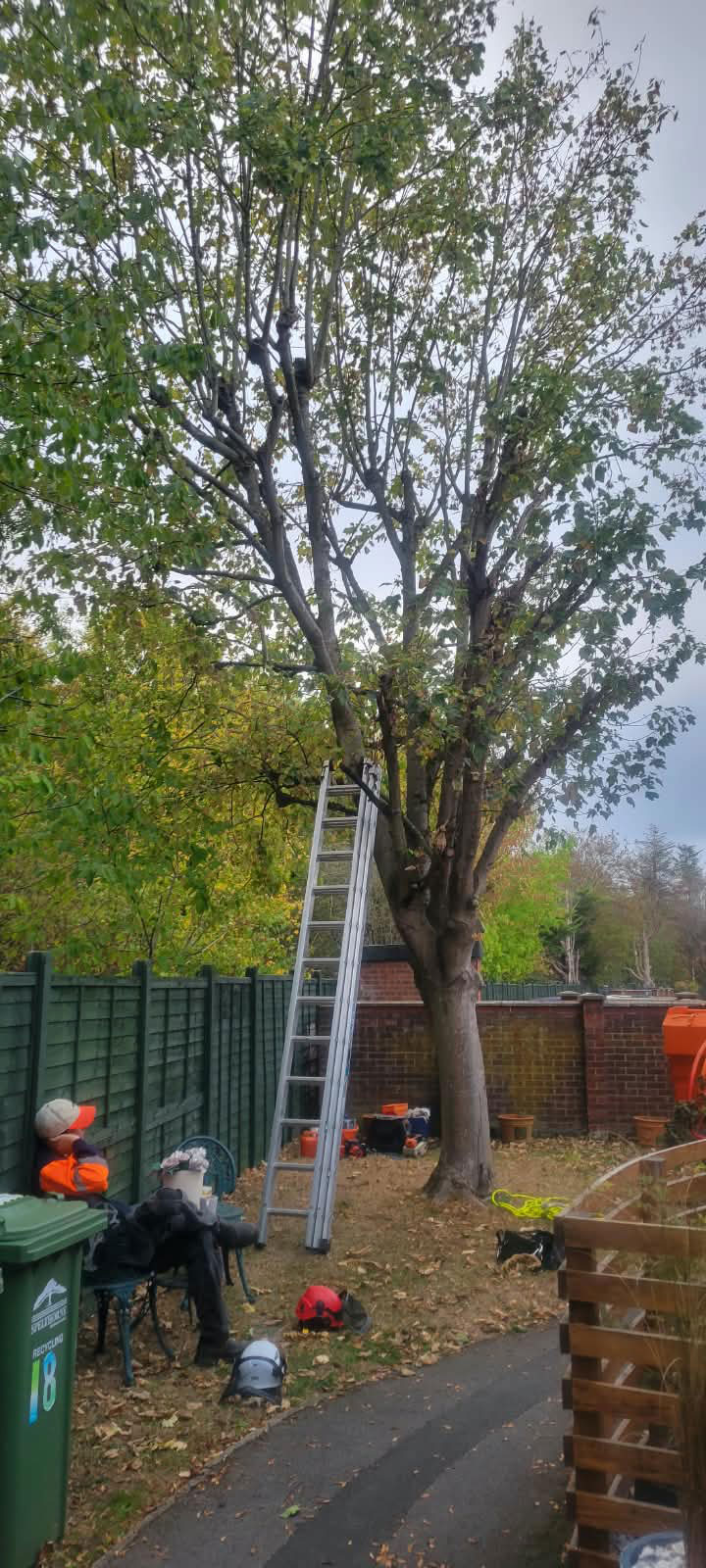
ArborLife Tree Surgeons were called to a property in Shepperton, Surrey, where a sycamore tree had previously been badly pruned and required further attention.
The objective was to carry out a carefully planned crown reduction, bringing the branches back to the tree's previous pollard points.
Rather than making arbitrary cuts throughout the canopy, our team used the established pruning framework to guide the work and manage the tree's future growth.
Poor tree pruning can have consequences that extend well beyond the immediate appearance of a tree.
Removing too much foliage, leaving inappropriate branch stubs or making poorly positioned cuts can encourage vigorous regrowth and create structural problems.
Some common consequences include:
Excessive regrowth: Severe pruning can stimulate the production of numerous new shoots.
Weak branch attachments: Regrowth from previous pruning wounds may require ongoing monitoring as it develops.
Unbalanced crowns: Inconsistent pruning can leave the tree with an uneven appearance or distribution of weight.
Large pruning wounds: Unnecessary cuts can increase the potential for decay to develop.
Repeated maintenance: Poorly planned work can create a need for further pruning sooner than expected.
Corrective tree surgery cannot reverse every effect of previous pruning, but it can help establish a more appropriate management approach.
For this Shepperton project, the sycamore had an existing history of pollarding.
Pollarding is a traditional method of tree management in which branches are periodically reduced to an established framework, encouraging new growth from the pollard heads.
When a tree has previously been pollarded, its management needs to take account of the existing pruning points and the structure of the regrowth.
ArborLife's approach was to reduce the sycamore's crown by pruning the branches back to the previous pollard points.
This allowed the team to manage the tree's overall size while working with its established pruning history.
Although crown reduction and pollarding are different techniques, the work on this tree involved reducing the existing crown to its former pollard framework.
A previously pollarded tree develops a distinctive structure over time.
Repeated pruning can create enlarged areas known as pollard heads, from which new shoots develop.
These points are important when planning future tree maintenance because the tree's structure, branch attachments and response to previous cuts all influence how it should be managed.
However, returning a tree to old pollard points is not automatically suitable in every case.
If a tree has been left unmanaged for many years, its regrowth may have become large and heavy. Cutting it back to the original points can involve substantial wounds or expose weaknesses in the old pollard heads.
A professional assessment is therefore essential before deciding how far a previously pollarded tree should be reduced.
In many cases, further professional pruning can improve the management of a tree that has previously received unsuitable work.
The aim is not necessarily to restore its original natural form, which may no longer be possible.
Instead, corrective pruning may help to:
Establish a more consistent crown structure
Manage excessive or poorly positioned regrowth
Reduce the size of the canopy where appropriate
Identify potentially weak or damaged branches
Develop a sensible programme for future maintenance
For the sycamore in Shepperton, returning the branches to the established pollard points provided a practical approach to managing its crown.
Sycamores are common throughout Surrey and can develop into substantial trees with broad, spreading canopies.
Their vigorous growth means they can quickly become prominent features in gardens, particularly where space is limited.
Although sycamores respond to pruning, excessive cutting can encourage dense regrowth and lead to further maintenance requirements.
The best approach depends on the tree's condition, location, previous management and the homeowner's objectives.
Where a sycamore has already been pollarded, a consistent long-term maintenance strategy is particularly important.
ArborLife Tree Surgeons provides crown reduction, pollarding, corrective pruning and general tree maintenance throughout Shepperton and the surrounding Surrey area.
Whether you have inherited a badly pruned tree, a mature sycamore that has become too large for its surroundings or a previously pollarded tree requiring maintenance, our experienced tree surgeons can assess the situation and recommend suitable work.
We also cover nearby areas including Walton-on-Thames, Weybridge, Sunbury-on-Thames, Esher, Cobham and Leatherhead.
Corrective pruning can sometimes improve the structure and future management of a badly pruned tree. However, large pruning wounds and structural defects cannot simply be reversed. The best approach depends on the condition of the tree and the extent of the previous work.
Crown reduction reduces the height or spread of a tree's canopy by shortening selected branches while retaining a suitable crown structure. Pollarding involves periodically removing regrowth back to an established framework of pollard heads.
Yes, in some circumstances. However, the age and condition of the pollard heads, the size of the regrowth and the tree's overall health must be assessed before undertaking the work.
There is no universal interval. The appropriate frequency depends on the tree's growth rate, condition, location and the size of the branches developing from the pollard heads. Regular assessment helps determine when further pruning is required.
Yes, a healthy sycamore will generally produce new growth following pruning. The amount and pattern of regrowth depend on the tree's condition, the severity of pruning and environmental factors.
If the tree is protected by a Tree Preservation Order, consent is normally required before pruning. Trees within conservation areas may also be subject to notification requirements. Your local planning authority can confirm whether restrictions apply.
If a previous tree surgeon has left your tree looking unbalanced, or you have a mature sycamore with excessive regrowth from old pollard points, ArborLife can help you understand the options.
Contact ArborLife Tree Surgeons for professional advice on corrective pruning, crown reduction and pollarding in Shepperton and across Surrey.
Our team can assess your tree and recommend an appropriate approach to its future maintenance.

© 2026 Arborlife