Call today for a free quote
07775 837892

Call today for a free quote
07775 837892
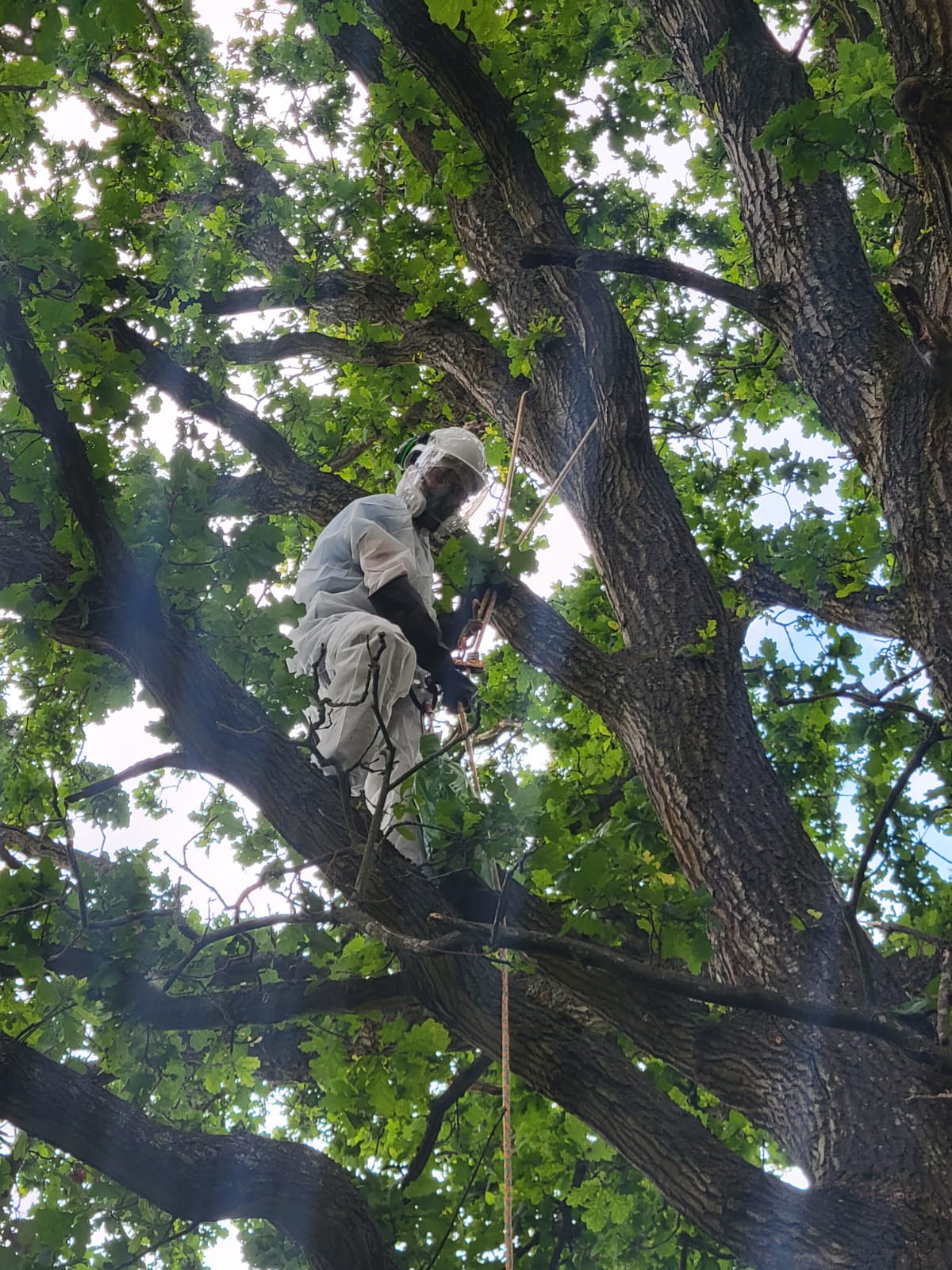
Oak Processionary Moth (OPM) continues to spread across Surrey, affecting mature oak trees in both residential gardens and public spaces. During the peak season, ArborLife Tree Services are regularly called out to inspect and remove OPM nests before they become a serious risk to homeowners, families and pets.
Our latest project took us to Hambledon Hill, Epsom, where a mature oak tree had developed several active Oak Processionary Moth nests within the canopy.
Wearing full specialist protective equipment and using professional climbing techniques, our qualified arborists safely removed each nest before securely containing and disposing of the hazardous material.
Understanding how Oak Processionary Moth develops helps explain why inspections during spring and early summer are so important.
Adult moths lay clusters of eggs high on oak branches during late summer. These eggs remain dormant throughout winter before hatching in spring as temperatures begin to rise.
The caterpillars feed on emerging oak leaves before constructing the distinctive silky nests that are commonly seen on trunks and larger branches.
As the caterpillars mature, they develop thousands of microscopic defensive hairs containing an irritant protein. These hairs are the greatest hazard and can remain dangerous long after the caterpillars have left the nest.
Later in the summer, the caterpillars pupate within the nest before emerging as adult moths, beginning the cycle again.
This is why early identification and professional removal play such an important role in reducing local infestations.
The mature oak tree at Hambledon Hill required careful planning before any work began.
After completing a detailed canopy inspection, our arborist climbed the tree using rope and harness techniques while wearing specialist PPE designed specifically for OPM removal.
Every visible nest was:
Working methodically throughout the canopy helps ensure no visible nests are overlooked.
Removing Oak Processionary Moth is not standard tree surgery.
The hazardous hairs released by the caterpillars can cause:
Because these hairs can become airborne, disturbing nests without the correct protective equipment can significantly increase the risk of exposure.
Professional removal minimises this risk while protecting both the tree and the surrounding environment.
During the OPM season, our experienced arborists work across Surrey inspecting and removing infestations from mature oak trees.
We provide specialist services for:
Whether you have discovered a single nest or suspect a larger infestation, ArborLife can provide a prompt, professional inspection.
Current guidance from the Forestry Commission highlights that Oak Processionary Moth is a significant defoliator of oak trees and that the caterpillars' urticating hairs present a health risk to both people and animals.
The guidance recommends that nests should only be handled by trained professionals wearing appropriate protective equipment, using approved removal methods to minimise the release of hazardous hairs.
This is exactly the approach followed by ArborLife on every OPM removal project across Surrey.
When do Oak Processionary Moth eggs hatch?
Eggs typically hatch during spring, usually in April, when oak leaves begin to emerge.
Why are the caterpillars dangerous?
Older caterpillars develop thousands of tiny defensive hairs that contain an irritant protein capable of causing skin irritation, eye problems and respiratory symptoms.
Can abandoned nests still cause problems?
Yes. Empty nests can remain hazardous because the irritating hairs stay trapped within the silk and may be released if disturbed.
Should I touch an OPM nest?
No. Never attempt to remove or disturb an Oak Processionary Moth nest yourself. Contact a specialist arborist experienced in OPM management.
Which areas does ArborLife cover?
We provide Oak Processionary Moth inspections and nest removal throughout Epsom, Cobham, Leatherhead, Weybridge, Guildford, Woking, Reigate, Horley and across Surrey.
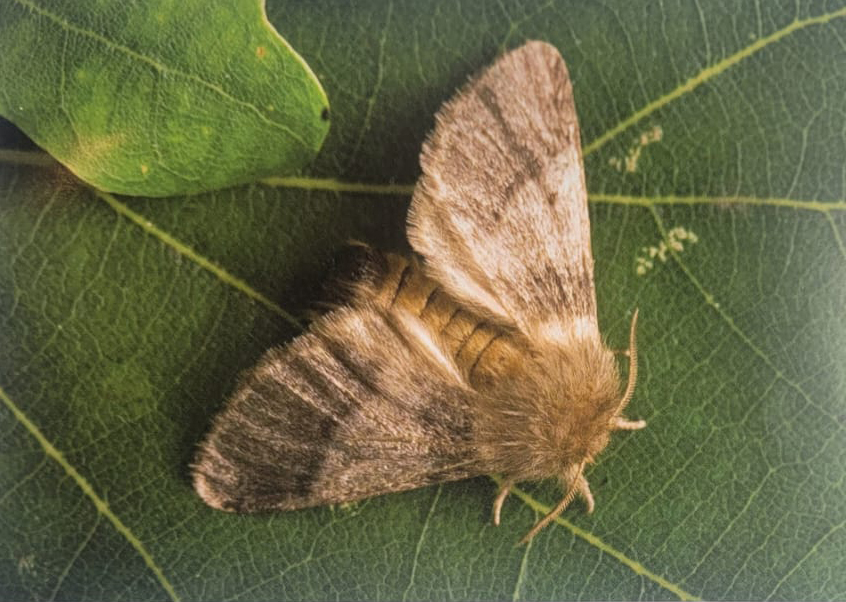
The Oak Processionary Moth lifecycle, showing how eggs hatch in spring, caterpillars develop harmful hairs, and adult moths emerge later in the summer. Early identification and professional removal help reduce infestations.
Oak Processionary Moth Specialists
ArborLife Tree Surgeons provide safe, specialist Oak Processionary Moth removal across Surrey and Greater London. Our trained arborists use full protective equipment, careful inspection methods and professional nest removal techniques.
View OPM Removal Service




© 2026 Arborlife