Call today for a free quote
07775 837892
Call today for a free quote
07775 837892
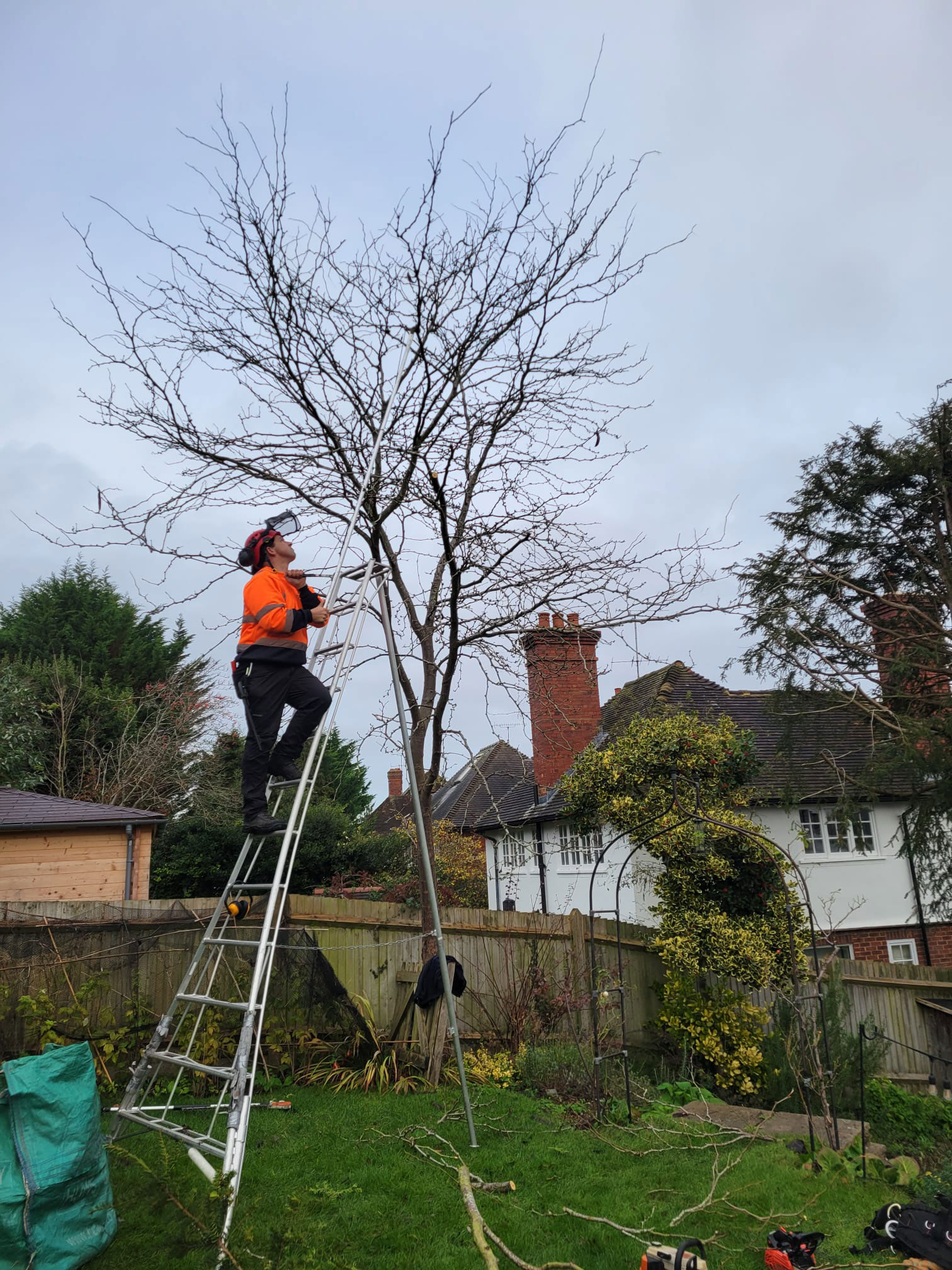
Recently, our ArborLife Tree Surgeons team were invited to Harvey Gardens in Guildford to carry out specialist pruning on two mature trees: a Honey Locust (Gleditsia triacanthos) and a Yew tree (Taxus baccata). Both trees had grown dense and heavy over the years, reducing the natural light in the client’s garden and affecting the surrounding plants.
Our goal was to open up the canopy, improve air flow, and allow far more sunlight to reach the garden — all while maintaining the trees’ natural shape and long-term health.
Honey Locusts naturally produce a wide, spreading canopy. Over time, they can become congested with crossing branches and excessive internal growth. In this case:
• The canopy was blocking sunlight
• Branches were growing unevenly
• Dense sections were restricting airflow
A sympathetic crown thin was required to restore balance and vitality.
The Yew tree had begun to:
• Cast heavy shade over the lawn
• Grow too close to a neighbouring boundary
• Develop dense internal growth
Yews respond extremely well to structured pruning, making it possible to reshape the canopy while maintaining its evergreen beauty.
At ArborLife, we only use professional-grade equipment to ensure clean, precise cuts and the highest standards of workmanship.
For this project, our team used:
• Stihl Chainsaws – for controlled removal of larger branches
• Silky Fox Pruning Saws – premium Japanese pull saws ideal for clean, accurate cuts
• Felco Secateurs – industry-leading hand tools for fine pruning and shaping
These tools allow us to work efficiently while protecting the tree from tearing, splitting, or unnecessary damage.
All pruning was conducted in line with BS3998:2010 – Tree Work Recommendations, ensuring:
• Cuts were made just outside the branch collar
• No unnecessary over-thinning
• Natural shape retained
• Only appropriate growth points used for reduction
• Tree health and stability prioritised
Working to BS3998 is essential for responsible tree care and ensures the trees recover well and continue to thrive.
Following the pruning:
• Significantly more light now reaches the garden
• The Honey Locust has a more open, balanced canopy
• The Yew tree retains its shape but no longer overshadows the space
• Airflow is improved, reducing the risk of fungal issues
• The client now enjoys a lighter, greener and more welcoming outdoor area
The transformation was immediate — the garden felt more open, vibrant and enjoyable.
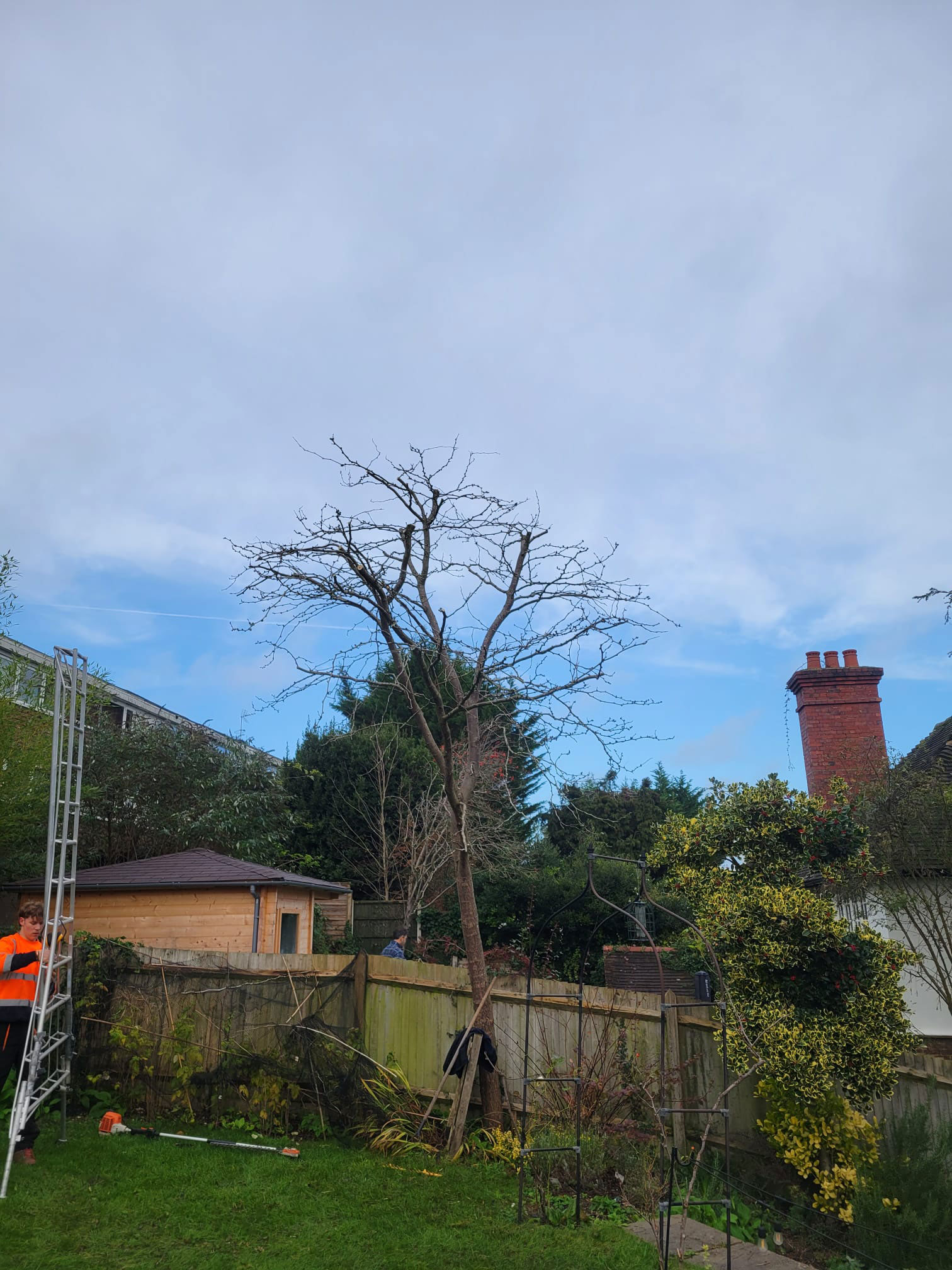
After pruning of the Honey Locust more light comes into the garden
1. Why prune a Honey Locust tree?
Honey Locust trees benefit from pruning to reduce density, improve shape and increase light penetration.
2. Is it safe to prune Yew trees?
Yes. Yews respond extremely well to pruning and can be shaped or thinned without damaging long-term growth.
3. What tools are used for professional pruning?
Arborists typically use chainsaws (Stihl), pruning saws (Silky Fox) and secateurs (Felco) for clean, accurate cuts.
4. Do you follow BS3998 standards?
Yes — all ArborLife tree work is carried out to BS3998:2010, ensuring correct pruning practices and healthy regrowth.
5. Will pruning improve light in my garden?
Absolutely. Crown thinning and selective pruning are highly effective ways to increase natural light into shaded areas.
© 2026 Arborlife